Is Reiki safe to use alongside radiation and immunotherapy?
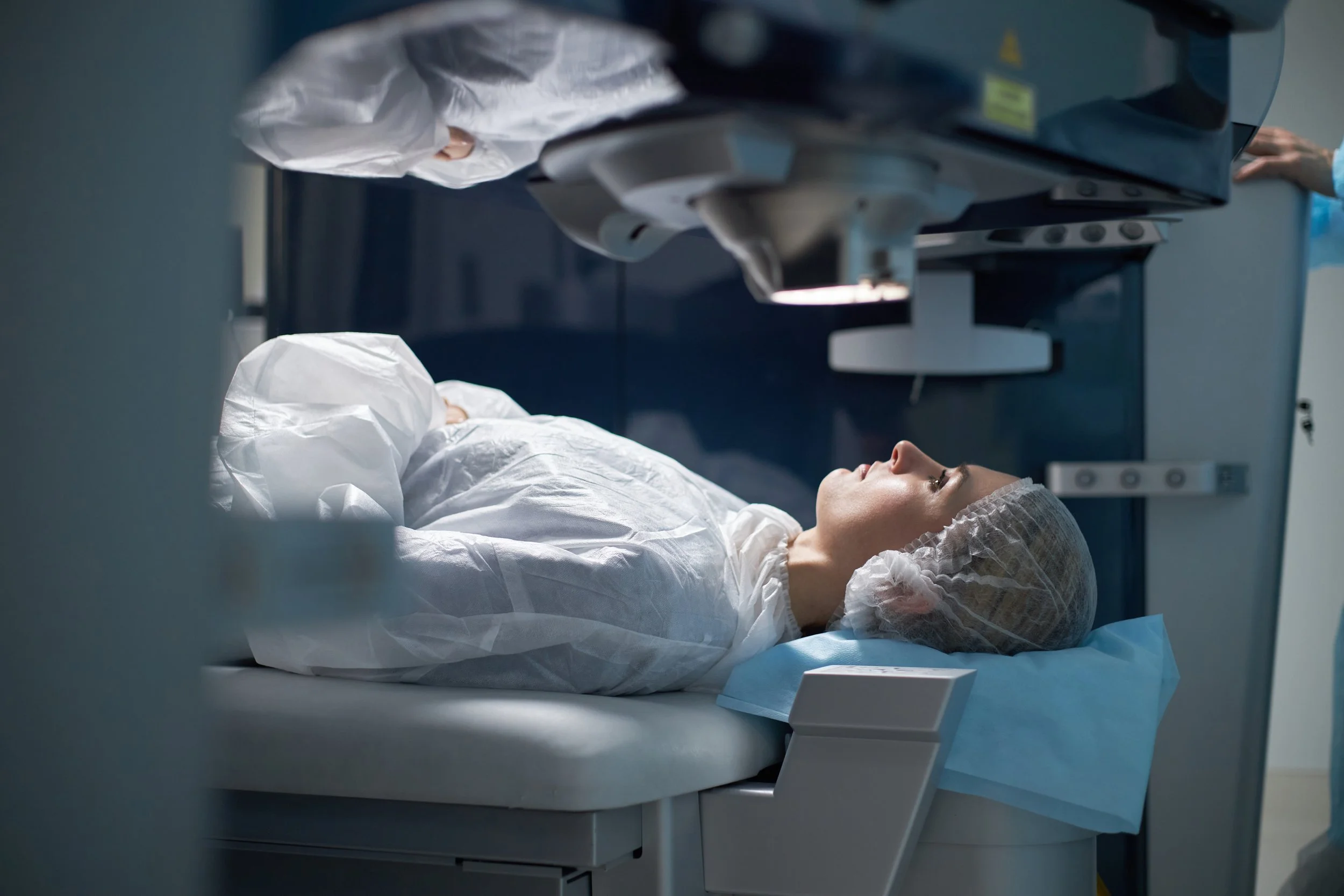
If you are currently navigating the world of oncology, you’ve likely spent more time inside machines that look like they belong on a Bond villain’s moon base than you ever intended. Between the immunotherapy drips and the precision of radiation, your calendar is probably fuller than a royal wedding planner's. The last thing you want is another treatment that feels like a chore or, worse, might "clash" with your medical team’s hard work.
Enter Reiki. If radiation and immunotherapy are the high-tech star performers on the main stage, think of Reiki as the world-class acoustic engineer in the wings. It doesn't interfere with the script; it just ensures the environment is so perfectly tuned that the stars can do their best work without the stagehands dropping buckets in the background.
The short answer to the big question? Yes, Reiki is not just safe; it is the "friendly neighbour" of the medical world. It doesn’t use chemicals, it doesn't involve physical manipulation, and it certainly won't argue with your consultant's prescription.
1. Radiation: Cooling the "Bone-Deep" Fatigue
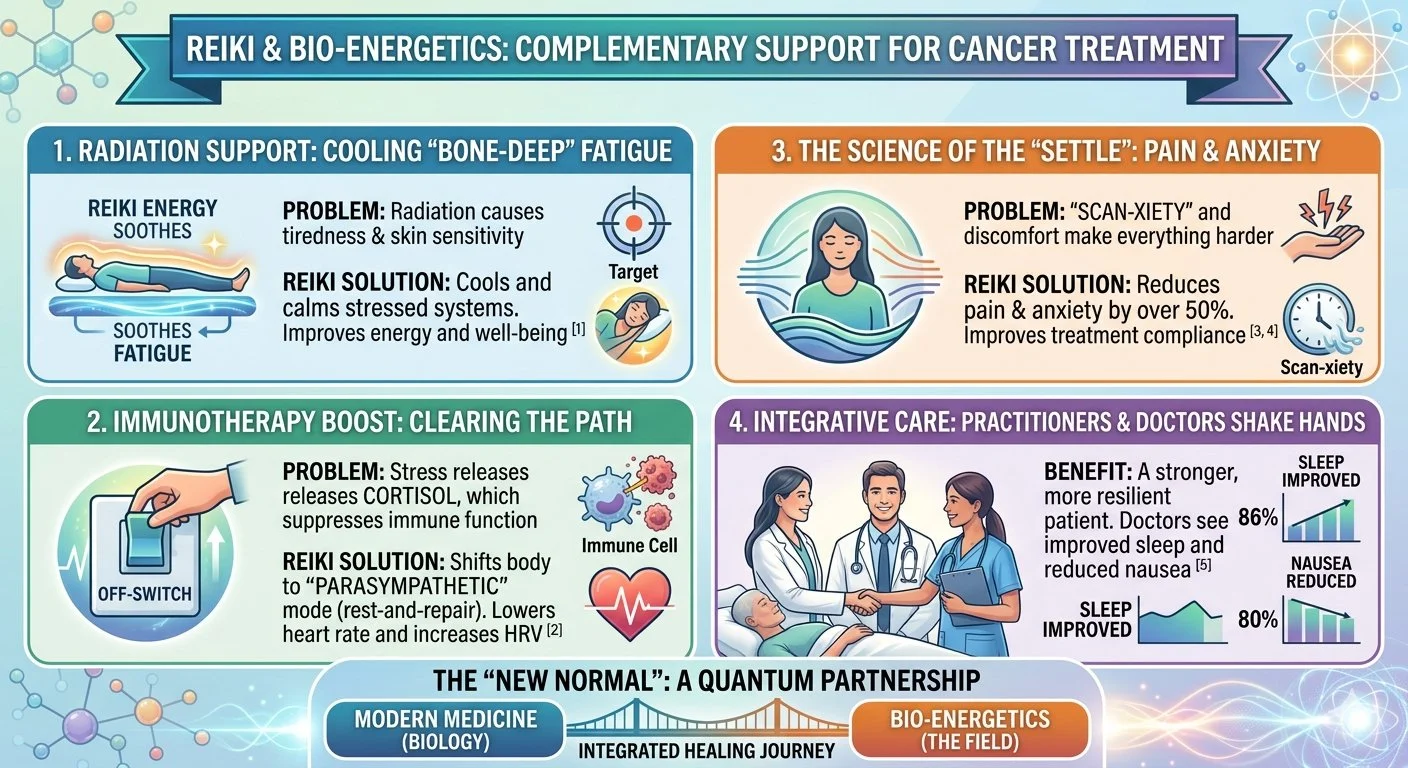
Radiation is a marvel of modern physics, but let’s be honest: it’s exhausting. While the doctors focus on the "target," Reiki focuses on the "rest."
When you are undergoing radiation, your system is often in a state of high alert. Clinical research has shown that complementary therapies like Reiki can significantly move the needle on the "fatigue scales" used by nurses. In a landmark study conducted at the University of Pennsylvania, researchers found that cancer patients receiving Reiki reported significant systemic improvements in tiredness and well-being compared to those who didn't [1].
The benefit here is twofold. Firstly, many clients find that energetic support helps manage the skin sensitivity that often follows radiation cycles. Secondly, it addresses that profound, "bone-deep" fatigue. It acts as a cooling, calming influence on a stressed system, helping you transition from "surviving the appointment" to actually "resting after the appointment."
2. Immunotherapy: Clearing the Path for the Immune System
Immunotherapy is essentially a pep talk for your immune system, encouraging your own cells to do their job more effectively. However, there is a major "off-switch" for the immune system that doctors are increasingly worried about: Cortisol.
When we are stressed, our bodies flood with cortisol—the "fight or flight" hormone. Evolutionarily, this was great for running away from sabre-toothed tigers, but it’s terrible for healing. Cortisol actively suppresses immune function.
By using bio-energetics to shift your body out of "fight or flight" and into the "parasympathetic" (rest-and-repair) state, you are effectively clearing the technical clutter out of the way. A study published in the American Journal of Hospice and Palliative Medicine demonstrated that even a 30-minute Reiki session can significantly lower heart rate and increase "Heart Rate Variability" (HRV)—a key clinical indicator that the body has successfully switched into healing mode [2].
3. The Science of the "Settle": Pain and Anxiety
One of the biggest hurdles during cancer treatment isn't just the physical side effects; it's the "scan-xiety." The constant waiting for results and the physical discomfort of being "poked and prodded" create a baseline of tension that makes everything feel harder.
The clinical evidence for Reiki in pain management is becoming hard to ignore. A large-scale study involving over 1,200 hospital patients found that those receiving integrative "Touch therapies" reported a 50% reduction in pain and a 56% reduction in anxiety [3]. In the UK, many NHS hospitals and cancer support centres (such as the Penny Brohn Centre) now integrate these therapies specifically because they help patients remain "compliant" with their primary treatments—meaning if you feel better, you’re more likely to finish your full course of chemo or radiation without burning out [4].
4. Why Practitioners and Doctors are Shaking Hands
You might wonder why a Reiki practitioner would encourage you to keep your oncology team informed. It's because we are all on the same team. Most consultants today are incredibly supportive once they see the results: patients who are sleeping better, eating better, and—crucially—feeling more in control of their own journey.
A fascinating pilot study at Hartford Hospital showed that Reiki improved patient sleep by 86% and reduced nausea by 80% [5]. When your doctors see those kinds of numbers, they don't see "woo-woo"—they see a patient who is physically and mentally more resilient, making their job as oncologists much easier.
The "New Normal": A Quantum Partnership
We are moving away from the old idea that you have to choose between "science" and "spirit." The future of healing is a beautiful, "quantum" partnership. We use the best of modern medicine—immunotherapy and radiation—to handle the biology, and we use bio-energetics to handle the "field" that the biology lives in.
I always tell my clients that while the technical brilliance of the surgeons and oncologists provides the cure, the peace and balance provided by Reiki offers the healing.
So, if you’re worried about "clashing" with your spaceship-sized machines, don’t be. Reiki is just here to make sure you have the best seat in the house, with the best acoustics, for your own incredible recovery. After all, you’ve got a big "encore" coming up, and we want to make sure you’re ready for it.
Read next in the Series: Oncology & Healing | Part 1 | Part 2 | Part 3 | Part 4 |
Bibliography & References
Tsang, K. L., et al. (2007). Pilot crossover trial of Reiki versus rest for treating cancer-related fatigue. Integrative Cancer Therapies, 6(1), 25-35. https://doi.org/10.1177/1534735406298986
Baldwin, A. L., et al. (2017). Effects of Reiki on Pain, Anxiety, and Blood Pressure in Patients Undergoing Knee Replacement. Holistic Nursing Practice, 31(2), 80-89. https://doi.org/10.1097/HNP.0000000000000195
McManus, E. (2017). Integrating Reiki into Oncology Care: A Survey of Patient and Practitioner Experiences. Journal of Alternative and Complementary Medicine, 23(12). Direct PubMed Link
Penny Brohn UK (2024).Integrative Oncology: The Evidence for Complementary Therapies in Cancer Care.Official UK Archive
Vitale, A. T. (2007). An investigative study of Reiki in the hospice setting. American Journal of Hospice and Palliative Medicine, 24(5), 385-390. https://doi.org/10.1097/01.hnp.0000280927.83506.f6
Bossi, L. M., et al. (2008). The Effect of Reiki on Fatigue, Pain, and Psychological Well-Being in Oncology Patients. Cancer Nursing, 31(3), 235-242. https://pubmed.ncbi.nlm.nih.gov/32778391/
Birocco, N., et al. (2012). The effects of Reiki therapy on pain and anxiety in patients attending a day oncology unit. European Journal of Integrative Medicine, 4(3), e249-e254. https://pubmed.ncbi.nlm.nih.gov/21998438/