The Biofield’s Deep Clean — The Science and Spirit of Yoga Nidra
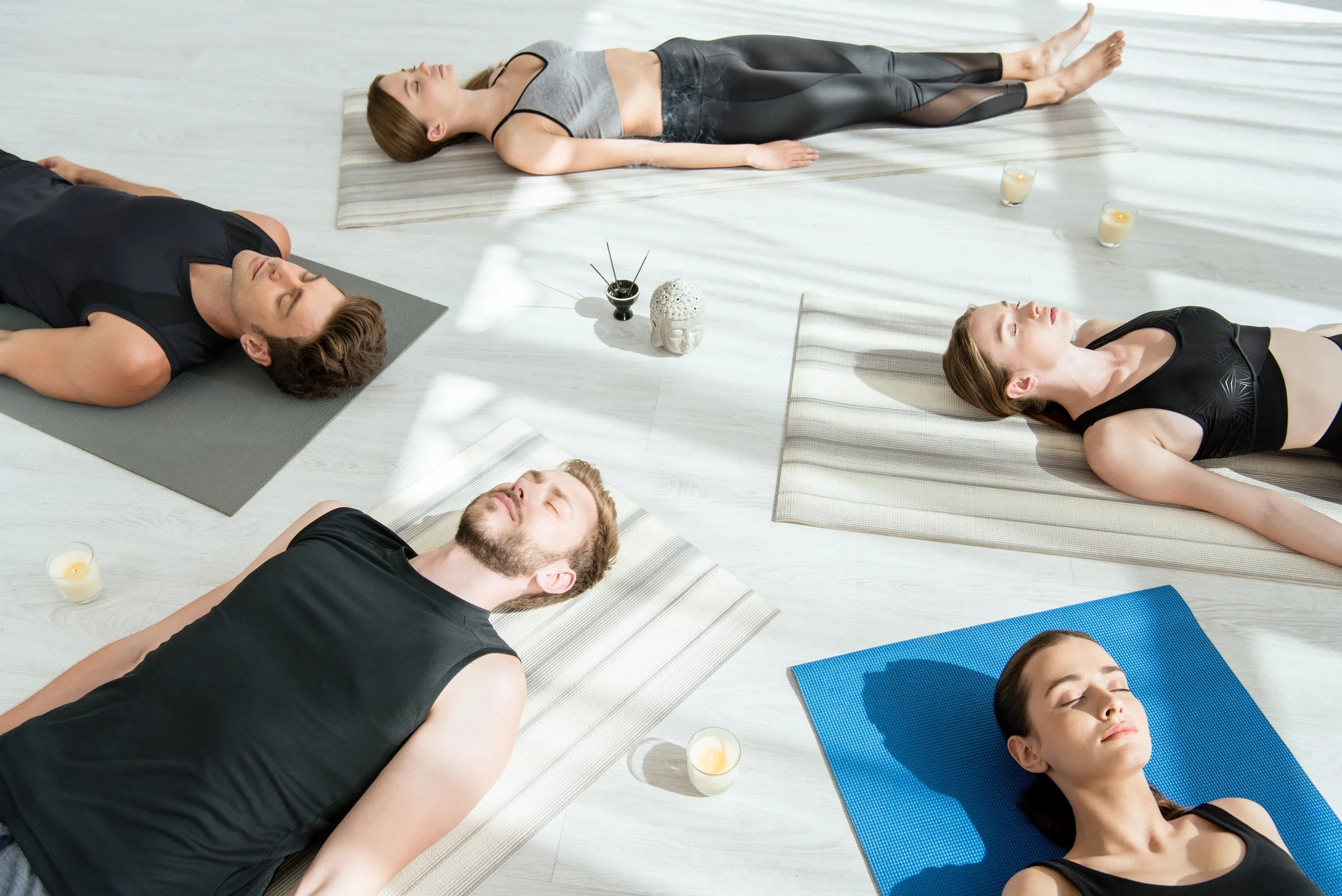
Yoga Nidra is a systematic method of inducing complete physical, mental, and emotional relaxation by moving the practitioner into the state of "conscious sleep." While it may appear to the casual observer that you are simply having a mid-afternoon nap, you are actually performing a precision-engineered "de-fragmentation" of your biological hard drive. For the modern human, whose biofield is often a cluttered attic of half-finished thoughts and the lingering residue of a thousand digital distractions, Yoga Nidra acts as the ultimate factory reset button. It is a deep-tissue massage for the nervous system, moving you past the noisy chatter of the ego and into the silent, regenerative basement of your own consciousness.
The 20-Minute Myth? The Clinical Reality of Compressed Rest
The bold claim that twenty minutes of Yoga Nidra is equivalent to two hours of conventional sleep is often met with a raised eyebrow, but the clinical data supporting this efficiency is substantial. The secret lies in Brainwave Architecture. In standard sleep, the body follows a linear path, often taking sixty to ninety minutes to descend through the lighter stages of NREM rest before finally reaching the restorative Delta state.
Yoga Nidra, through a structured rotation of consciousness, bypasses the "scenic route" [1]. By following a specific neurological map, the practitioner enters the "Hypnagogic" state—the liminal space between wakefulness and sleep. In this zone, the brain produces high-amplitude Alpha and Theta waves, dipping frequently into the Delta range while the practitioner remains technically conscious [2]. Because the sympathetic nervous system (the "fight or flight" accelerator) is completely disengaged, the body’s metabolic rate drops and the "cleaning" of metabolic waste happens with an efficiency that standard, often restless, sleep cannot match.
Not All Nidras Are Created Equal: The Layered Approach
A common pitfall in the modern wellness space is the "Free Guided Visualisation" masquerading as Yoga Nidra. While listening to a soothing voice describe a peaceful forest is pleasant, it does not constitute a true Nidra practice. Authentic Yoga Nidra is designed to systematically move the practitioner through the Koshas, or the five "sheaths" of the human biofield.
Annamaya Kosha (Physical): Addressed through the "Rotation of Consciousness," where the mind moves rapidly between body parts to break physical patterns of tension.
Pranamaya Kosha (Energy): Addressed through specific breath awareness and Vagus nerve regulation.
Manomaya Kosha (Mental/Emotional): Addressed through the evocation of opposite sensations (e.g., experiencing intense heat followed by intense cold) to balance the emotional biofield.
Vijnanamaya Kosha (Wisdom/Intuition): Addressed through rapid, non-linear visualisation.
Anandamaya Kosha (Bliss): The core of the biofield where true, profound healing occurs.
If a session skips these physiological "unlocks" and goes straight to the "visualisation," it fails to drop the biofield into deep coherence [3]. A proper practice is a mechanical key; it must turn every tumbler in the lock of the nervous system to open the door to the subconscious.
The Sankalpa: Seeding the Subconscious Biofield
The most powerful tool within the Yoga Nidra structure is the Sankalpa, or "Resolved Intent." Unlike a standard New Year’s Resolution—which is often made from a place of self-judgment—the Sankalpa is a short, positive statement planted when the mind is at its most receptive.
Because Yoga Nidra induces a Theta-dominant state, the "Critical Factor" of the ego—that inner voice that argues with your goals—is effectively offline. This makes the biofield exceptionally "plastic." When you state your Sankalpa in this state, you are bypassing your conscious resistance and seeding a new pattern directly into your neurobiology. Clinical studies in neuroplasticity suggest that intentions set during these deep states of relaxation can effectively "rewire" habitual stress responses and improve emotional resilience [4].
Clinical Support: From "Chemo-Brain" to Alzheimer’s
Yoga Nidra is no longer relegated to the yoga studio; it is increasingly utilised as a potent clinical intervention for severe neuro-cognitive and physiological disorders.
"Chemo-Brain" and Cancer Recovery: Patients undergoing chemotherapy often suffer from "Chemo-Brain"—a state of cognitive fog, memory loss, and fatigue. A study published in Applied Psychophysiology and Biofeedback demonstrated that Yoga Nidra significantly improved cognitive function and reduced systemic oxidative stress in cancer patients [5].
Alzheimer’s and Cognitive Decline: Research into Yoga Nidra’s impact on the elderly suggests that the practice can increase dopamine release in the ventral striatum and improve overall brain connectivity. By regularly entering the Theta/Delta border consciously, patients show improved memory retention and a marked reduction in the "sundowning" anxiety often associated with dementia [6].
Post-Workout Recovery: For the athlete, the biofield after an intense session is often in a state of "jagged" high-Beta. Yoga Nidra accelerates the clearance of lactate and reduces inflammatory markers, triggering the parasympathetic "repair" mode much faster than a standard cool-down.
The Protocol: Mastering the "Off-Load" and the "Rescue"
To get the most from this practice, it should be applied strategically based on your bio-energetic needs:
Before Bed: Use Yoga Nidra to "off-load" the day’s emotional residue. This ensures that when you finally fall into sleep, you are starting from a state of Delta-readiness rather than spending the first four hours of the night simply trying to calm your nervous system down.
The Afternoon Reset: If you hit the "3:00 PM wall," a twenty-minute Nidra session is more effective than caffeine. It provides a genuine energetic "rinse" that clears the mental fog without the subsequent crash.
The 5:00 AM "Sleep Deficit" Rescue: We have all experienced the dread of waking up two hours before the alarm, knowing we are in a massive sleep deficit but unable to drift back off. Instead of lying there ruminating on your exhaustion, use Yoga Nidra as a biological "bridge." Even if you don't fall back into a deep sleep, the 20 minutes spent in the Nidra state provides the deep physiological rest your nervous system craves. It settles the biofield, reduces the "emergency" cortisol spike associated with early waking, and leaves you feeling significantly more grounded and ready for the day than if you had spent that time fighting for a few minutes of "trash" sleep.
So, instead of just "lying there" and hoping your brain eventually stops listing every embarrassing thing you've ever done, why not use a system refined over millennia and validated by modern fMRI data? Your biofield doesn't need more "stimuli" or another self-help book; it needs a deep, structured silence.
Stop trying to force your brain to be still and start using the mechanical layers of Yoga Nidra to let the stillness happen to you. Seed your Sankalpa, rotate your consciousness, and finally experience what it’s like to be truly "empty" in the most restorative way possible. You aren't just taking a nap; you are performing a deep-tissue massage on your very soul.
Rest deeply, you beautiful, vibrating field of energy.