Why Kundalini Yoga is the Ultimate Hack for Your Nervous System
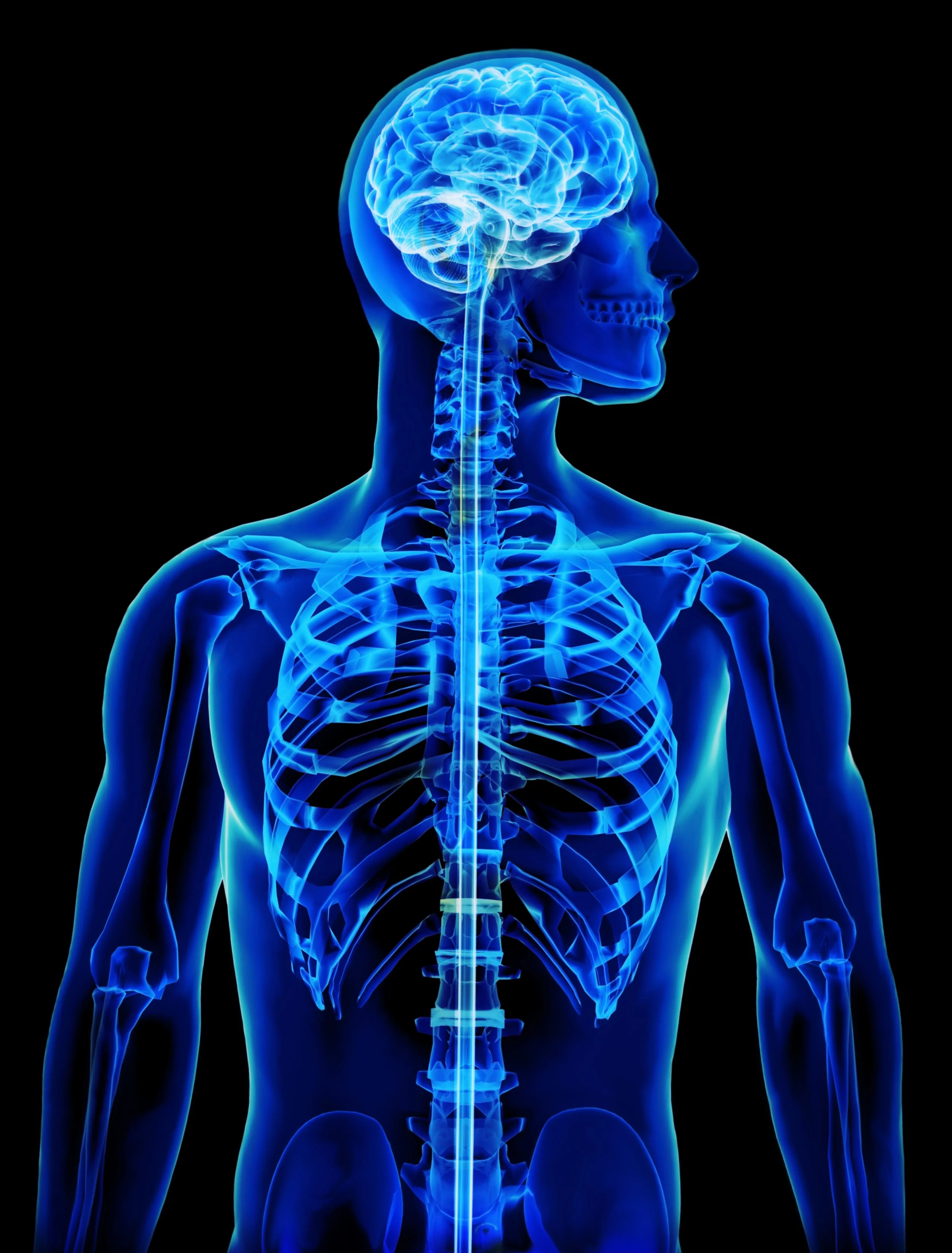
If you’ve ever walked into a yoga studio and seen a group of people wearing all white, breathing like they’re trying to inflate a bouncy castle with their nostrils, and chanting sounds that resemble a radio tuning between stations, you might have felt a bit confused. You’ve probably wondered if they know something you don't, or if they’ve simply had one too many ceremonial cacaos. Welcome to the world of Kundalini Yoga. To the uninitiated, it looks like a bizarre cult of the core; but to a biophysicist, it looks like a sophisticated method for jump-starting the human nervous system.
The truth is, your spine is essentially a high-voltage power line wrapped in muscle. When that line gets "frayed" by modern stress, your whole house starts to flicker. Before you decide that "energy work" is just for people who own too many crystals and don't believe in deodorant, let’s look at the science. We are moving past the era of seeing the body as a bag of chemicals and entering the era of the body as a bioelectric semiconductor. So, let’s unroll the mat and see why your "Prana" is actually just your "Potential Difference."
The Origins: Tantra as Technology
To understand Kundalini, we have to look at its roots in Tantra. In the modern West, "Tantra" has been unfortunately rebranded as a niche bedroom hobby for rockstars, but its origins are far more technical. Ancient Tantric practitioners viewed the human body as a microcosm of the universe—a complex network of "Nadis" (channels) through which energy flows.
In biophysical terms, these Nadis correspond remarkably well with the peripheral nervous system and the fascial network [1]. Tantra was, in essence, an early "user manual" for the human biofield. It taught that through specific movements and breathwork, one could "weave" (the literal meaning of Tan) their internal energy into a state of supreme coherence. It wasn't about escapism; it was about total system integration.
What is Kundalini? (The Biophysical View)
Kundalini Yoga is often called the "Yoga of Awareness," but it could just as easily be called "Endogenous Bioelectric Stimulation." The practice focuses on awakening the "Kundalini energy" at the base of the spine—often visualised as a coiled serpent.
When we strip away the metaphor, we are talking about the Cerebrospinal Fluid (CSF) pump and the Vagus Nerve [2]. By using "Kriyas" (specific sets of actions), Kundalini yoga creates rhythmic pressure changes in the spinal column. This isn't just stretching; it’s a mechanical way to stimulate the piezoelectric effect in our bones and fascia. When you apply pressure to certain tissues, they generate an electrical charge. Kundalini yoga is essentially a series of movements designed to "charge the battery" of the central nervous system.
5 Ways Kundalini Recalibrates Your Biofield
1. Rhythmic Entrainment and Brainwave States
Kundalini often uses "Breath of Fire"—a rapid, rhythmic diaphragmatic breath. This creates a phenomenon known as rhythmic entrainment. Studies show that rhythmic breathing can synchronise the heart rate and brainwave patterns, moving the practitioner from high-stress Gamma waves into a state of Alpha-Theta coherence [3]. This is the "flow state" where the body’s repair instructions are most clearly broadcast to the cells.
2. Vagal Tone and the Parasympathetic Shift
The chanting and "Mantra" work in Kundalini aren't just for atmosphere. The vibration of certain sounds stimulates the Vagus Nerve through the vocal cords and the roof of the mouth. Research indicates that this stimulation increases Vagal Tone, flipping the body out of "Survival Mode" (Sympathetic) and into "Rest and Repair" (Parasympathetic) [4]. For someone with chronic inflammation, this shift is like finally turning off a blaring fire alarm.
3. The Piezoelectric Charge of the Spine
As mentioned, our bones and connective tissues are piezoelectric. Rhythmic spinal flexes (like "Cat-Cow" or "Spinal Twists") create a measurable electrical current that travels through the fascial sheath [5]. This current helps maintain the Transmembrane Resting Potential of the cells, ensuring that the "biological capacitors" we discussed in our previous article stay fully charged.
4. Glandular Tuning (The Endocrine Link)
Kundalini focuses heavily on the "Chakras," which correlate directly to the locations of our major endocrine glands (the thyroid, adrenals, pineal, etc.). By using specific postures to apply pressure or increase blood flow to these areas, the practice acts as a "tuner" for our hormonal output [1]. When your hormones are balanced, your bioelectric "signal" is much cleaner.
5. Clearing "Bioelectric Congestion"
We’ve all felt that "heavy" feeling after a stressful day. In biophysics, this is often a result of fascial constriction—where the body’s conductive tissues tighten up, creating "resistance" in the circuit. The repetitive, often vigorous movements of a Kundalini Kriya act as a mechanical "flush," moving stagnant fluid and restoring the conductivity of the tissue [6].
The "Serpent" and the Semiconductor
The ancient image of the "serpent" rising up the spine is a perfect metaphor for an electrical current moving through a conductor. When your spine is aligned and your fascia is hydrated and supple, you become a superconductor for your own internal energy. You feel light, clear, and "on." When you are stressed and dehydrated, you become a "high-resistance" circuit—everything feels like a struggle, and your "battery" drains faster than a five-year-old smartphone.
Integrating Kundalini as a form of "Bioelectric Yoga" doesn't mean you have to change your religion or start wearing a turban. It simply means acknowledging that your body is an electrical system that requires regular maintenance. Whether you call it "Prana," "Qi," or "Bioelectric Potential," the goal is the same: Coherence.
So, the next time you see someone doing "Breath of Fire" and looking like they’re having a very intense conversation with their own belly button, remember: they aren't just being "spiritual." They are performing a high-level system reboot. They are clearing the static, charging their capacitors, and ensuring their "human radio" is tuned to the highest possible frequency.
You don't need to be able to put your foot behind your head or chant in Sanskrit for three hours to benefit from this. You just need to be willing to move your spine and breathe like you actually mean it. After all, if your "internal wires" are currently a tangled mess of stress and "wired-but-tired" paradoxes, a little bit of rhythmic breathing is a small price to pay for a clear signal. So, take a deep breath, sit up straight, and let's get that "serpent" off the sofa and back into the circuit. Your biofield will thank you for the upgrade.
Bibliography & Further Readings
[1] Rubik, B. (2002). The Biofield Hypothesis: Its Biophysical Basis and Role in Medicine. Journal of Alternative and Complementary Medicine. PubMed Link
[2] Levin, M. (2012). Molecular bioelectricity in development, regeneration and cancer. Nature Reviews Cancer. https://pmc.ncbi.nlm.nih.gov/articles/PMC4244194/
[3] McCraty, R., et al. (2009). The Global Coherence Initiative: Creating a Coherent Maternal Field. Global Advances in Health and Medicine. HeartMath Research Link
[4] Vialatte, F. B., et al. (2009). A review of EEG-based analysis of Kundalini Yoga. Neuroscience Letters. https://www.sciencedirect.com/science/article/abs/pii/S1744388121000281
[5] Oschman, J. L. (2015).Energy Medicine: The Scientific Basis. Elsevier Health Sciences. https://shop.elsevier.com/books/energy-medicine/oschman/978-0-443-06729-7
[6] Bordoni, B., & Simonelli, M. (2018). The Continuity of the Body: Fascia and the Biofield. Cureus. NCBI Link