The Science of ‘Fire Cutting’: Exploring Europe’s Traditional Burn Healers
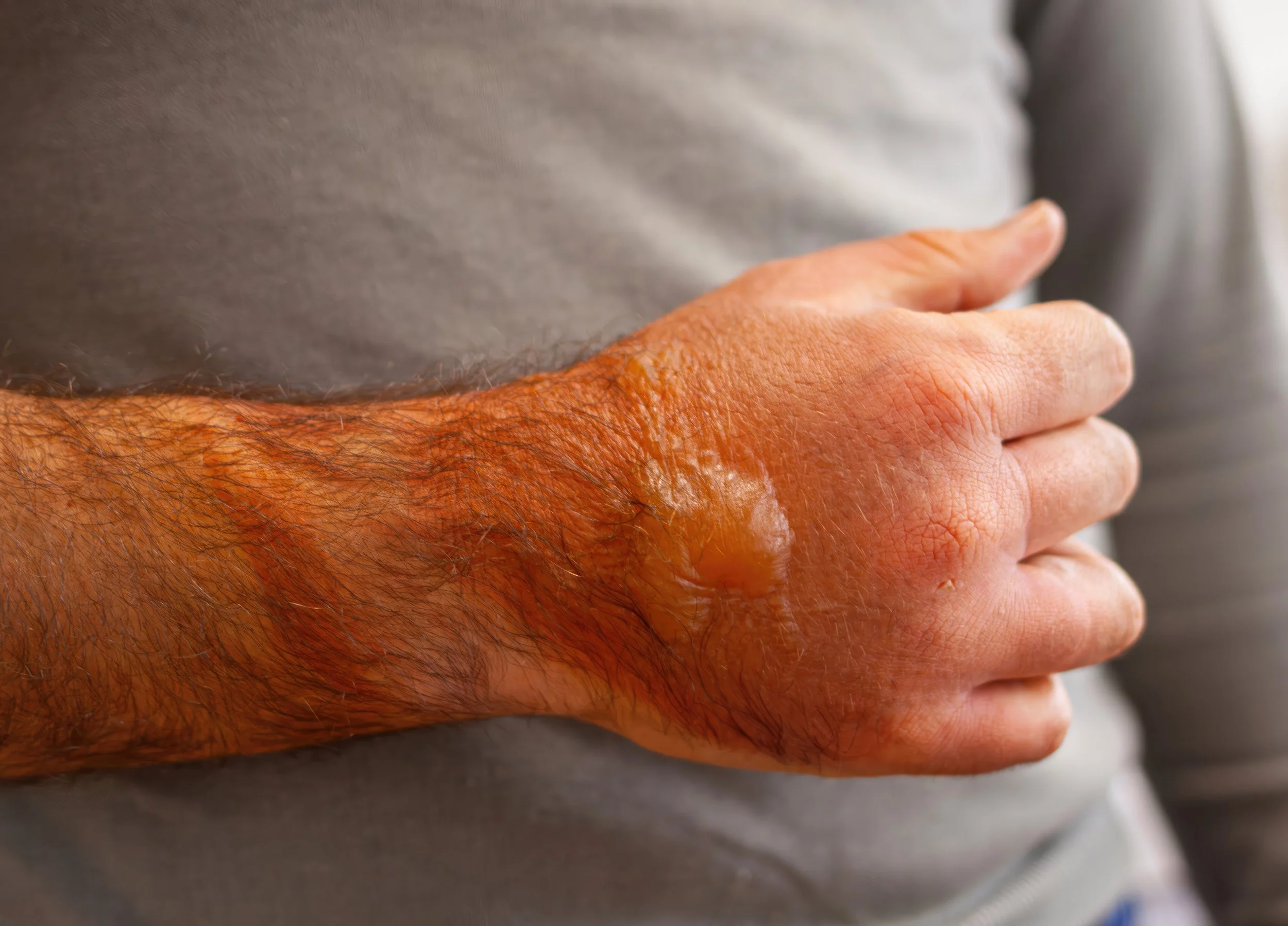
If you were to walk into certain world-class burn units in France or Switzerland today, you might encounter something that seems, at first glance, to belong in a medieval village rather than a sterile, high-tech medical facility. Alongside surgeons in scrubs and nurses managing complex IV drips, you might find a discreet list of contact details for a coupeur de feu—a "fire cutter".
In the French-speaking world, these individuals (also known as faiseurs de secret in Switzerland) are the local "emergency contacts" for the invisible world. They are called upon to "take the fire out" of a burn. Whether it’s a standard kitchen mishap with a rogue chip pan, an industrial accident, or the modern, persistent "burn" caused by oncology radiation, these healers are a quiet but vital part of the patient care pathway. It is a tradition that has remained alive for centuries for one very simple, pragmatic reason: in the eyes of the patients and many of their doctors, it works [1].
The Phenomenon of the 'Fire Cutter'
In the European tradition, the fire cutter doesn't arrive with ointments or bandages. Instead, they use a combination of intense internal focus and, often, a whispered "secret" or prayer to halt the progression of a burn. Patients frequently report an almost instantaneous cooling of the skin—a sensation as if a block of ice has been placed directly on the wound—followed by a dramatic reduction in pain and swelling.
While this was once dismissed as "folk magic," the reality is far more integrated. A significant study from the Lausanne University Hospital (CHUV) found that roughly 80% of hospital staff in Swiss burn centres are aware of these "secrets," and many actively facilitate the practice because of the observed clinical benefits for the patients [1]. The fact that medical professionals, grounded in rigorous biology, frequently request their assistance suggests there is a biological mechanism at play that we are only just beginning to map through the Bioelectric Blueprint. It is a bridge between the clinical and the communal, proving that sometimes the best medicine is a specific, focused human presence.
Thermodynamics and the 'Transfer' of Heat
From a biophysical perspective, a burn is far more than just "damaged tissue"; it is a state of massive thermal and ionic upheaval. When skin is burned, the cells enter a state of "oxidative screaming." They release a flood of inflammatory markers, and the electrical potential of the cellular membranes—the voltage that keeps a cell healthy—collapses.
The fire cutter appears to act as a "thermal regulator" for this runaway process. Through the principles of Biological Thermodynamics, we know that heat and energy naturally seek equilibrium [4]. In the presence of a healer who has trained their own nervous system to maintain a state of high "thermal coherence," the patient’s "chaotic heat" may find a path to dissipate.
This is essentially a form of Thermal Entrainment. The healer’s calm, regulated biofield provides a stable template that helps the patient’s tissue "stand down" from its inflammatory spike. By modulating the local electromagnetic field of the burn site, the healer may actually be slowing the "oxidative cascade"—the chemical chain reaction that causes a burn to keep "cooking" the skin even after the initial heat source has been removed.
The Science of Distant Intentionality
Perhaps the most mind-bending aspect of the coupeur de feu is that the work is often performed remotely. A healer in a distant mountain village can receive a phone call, take the name of the victim, and "cut the fire" from miles away. While this challenges our traditional understanding of locality, it fits within the framework of Distant Intentionality [2].
As we see in studies involving functional MRI (fMRI), human intention can correlate with changes in a recipient’s brain activity and nervous system state, even when they are physically separated [2]. In the case of a burn, the healer’s focused thought may trigger a hormetic response in the patient. This signals the body to release Heat Shock Proteins (HSPs) more rapidly [3].
These proteins act as cellular "chaperones," rushing to the site of the burn to prevent proteins from denaturing (unravelling) and to jump-start the repair of the cellular membrane [3]. By "pinging" the patient's biofield with a specific signal of "restoration," the healer provides the biological instructions the body needs to stop the destruction and start the repair. It’s essentially "remote desktop support" for your biological operating system.
Bio-Photons: The Light of the Secret
Every living cell in your body emits ultra-weak light known as Biophotons. Research has demonstrated that these aren't just metabolic byproducts; they are actually "neural communication signals" that travel through the nervous system [5]. When a part of the body is burned, this biophotonic output becomes erratic and high-intensity—a visual representation of cellular distress.
The fire cutter, through their focused state, may be acting as a "coherent light source." By reorganising the biophotonic communication of the damaged tissue, they allow the cells to communicate the instructions for repair more effectively. This "light-based reset" reduces the likelihood of severe scarring because the body’s "construction crew" finally has a clear set of blueprints to work from.
Clinical Observation in Modern Oncology
One of the most practical, grounded applications of fire cutting today is in the support of cancer patients. Radiotherapy often causes radiation dermatitis—a painful, persistent burning of the skin that can become so severe that life-saving treatment must be paused.
Clinical observations in French and Swiss hospitals have noted that patients who utilise fire cutters often experience fewer interruptions in their treatment because their skin remains significantly more resilient [1]. By addressing the "bioelectric heat" alongside the physical trauma, the healer helps the body’s micro-circulation return to normal [6]. This allows oxygen and nutrients to reach the damaged cells faster, effectively "cutting" the time the body stays in the destructive, inflammatory phase. It is a perfect example of "Integrated Medicine"—using the best of high-tech oncology alongside the best of ancient human connection.
A Living Heritage of Care
There is something deeply humbling about the tradition of the fire cutter. Most of these individuals offer their help for free or for a nominal "gift," viewing it as a sacred service to their community. It reminds us that our bodies are not isolated machines; we are part of a shared biological field. When one person is "on fire," another can reach out—through physics, tradition, and a bit of "the secret"—to help them find their way back to the cool.
By recognising these traditions, we aren't moving away from science; we are expanding it. We are acknowledging that the human biofield has capacities we are only just beginning to name. Whether the healer is in the room or on the other side of the Alps, the "Fire Cut" is a profound reminder that we are all connected by an invisible, electrical thread.
It’s a bit like having a biological "fire extinguisher" on speed-dial. While we might not fully understand every syllable of the "code" being whispered in a Swiss village, the results speak for themselves. In a world of high-tech interventions, there’s still something to be said for the person who can look at a burn and say, "I’ll take that heat for you." It turns out the "Secret" might just be one of the most sophisticated forms of bio-hacking we’ve ever known. Just say "merci" and enjoy the cool.
Bibliography & Further Reading
Kasser, S., et al. (2019). Acceptance of Folk Medicine and its ‘secrets’ in a Swiss Burn Centre. Burns https://pmc.ncbi.nlm.nih.gov/articles/PMC7155408/
Achterberg, J., et al. (2005). Evidence for Correlations Between Distant Intentionality and Brain Function in Recipients.https://www.researchgate.net/publication/7372367_Evidence_for_Correlations_Between_Distant_Intentionality_and_Brain_Function_in_Recipients_A_Functional_Magnetic_Resonance_Imaging_Analysis
Iguchi, M., et al. (2012). Heat shock proteins and their role in physical therapy and tissue repair.https://pubmed.ncbi.nlm.nih.gov/22488284/
Schneider, E. D., & Kay, J. J. (1994). Biological Thermodynamics: The Energetics of Life, Entropy, and Complexity.https://www.sccs.swarthmore.edu/users/08/bblonder/phys120/docs/schneider.pdf
Sun, Y., Wang, C., & Dai, J. (2010). Biophotons as neural communication signals demonstrated by in situ biophoton autography.https://pubmed.ncbi.nlm.nih.gov/20221457/
Ross, C. L., et al. (2019). Micro-circulation & Healing: Using Pulsed Electromagnetic Fields to Modulate Inflammation.https://pmc.ncbi.nlm.nih.gov/articles/PMC8370292/